Dry eye disease (DED) affects people worldwide, with prevalence ranging from 5% to 50%.1 In the U.S., about 16.4 million adults have diagnosed DED.2
To address this, immunomodulators are used to help treat the inflammatory cycle that underlies DED.3-5 This may provide a growth opportunity for primary care ODs who screen, diagnose, and start therapies during routine exams.
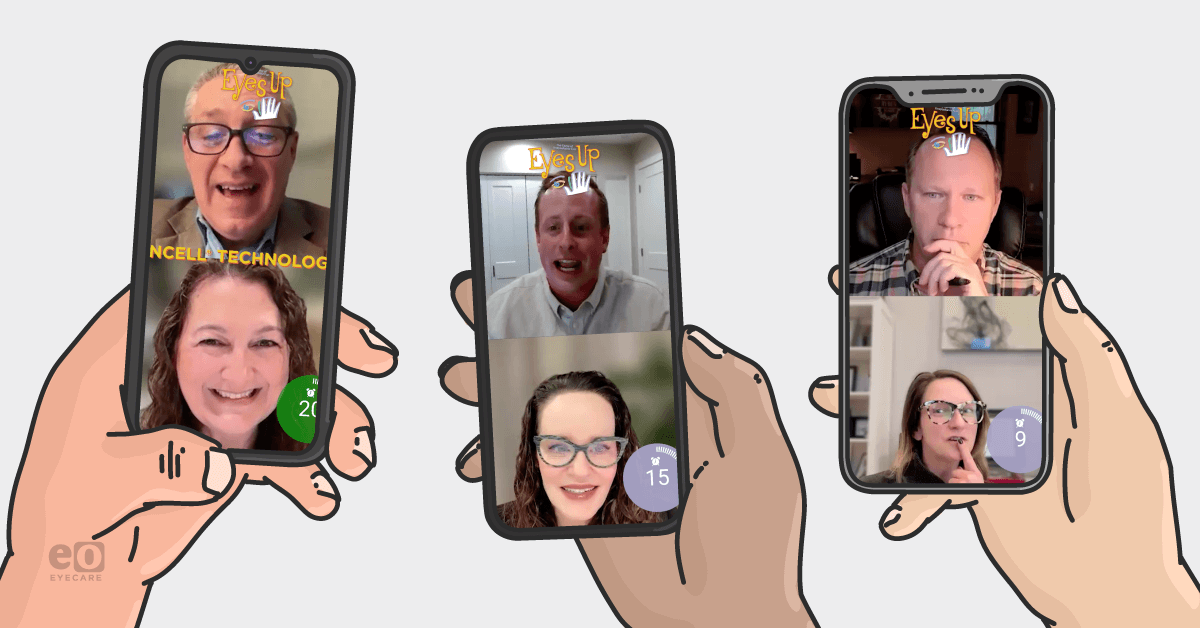
EyesUp: Ocular Surface Edition, recorded with three optometrist–ophthalmologist pairs, brings fun, fast-paced gameplay together with clinical substance. Teams of two paired up, with one taking the role of host and the other as contestant, to test their knowledge. With only three clues, see how they met the challenge!
Featured in this series are Mark Milner, MD, and Nancy Draskovic-Dosen, OD; Brandon Ayres, MD, and Cecelia Koetting, OD; and Laura Periman, MD, and Chris Kruthoff, OD.
From fungus to treatment
Originally derived from a fungus, cyclosporine helped revolutionize organ transplant medicine through the prevention of organ rejection.3,6
Cyclosporine is a calcineurin inhibitor and has been used in ophthalmic formulations for decades. One aim of this immunosuppressant is to increase tear production in patients living with dry eye.3 Its intended mechanism is to inhibit calcineurin in T-cells, reducing inflammation that can alter the structure or functionally paralyze tear-secreting glands.3,7
Locking in with NCELL
Cyclosporine has poor water solubility, which makes it difficult to deliver through the watery tear film to the ocular surface.3
CEQUA uses NCELL technology to deliver 0.09% cyclosporine.8 Using a hydrophobic core and a hydrophilic outer shell, the formulation encapsulates cyclosporine inside nanomicelles.3 The nanomicelles then penetrate the tear film, delivering the drug into conjunctival and corneal tissue.3,9,10
Artificial in-tear-igence
Artificial tears are a common first stop for dry eye relief. But while artificial tears do lubricate and soothe the irritation that comes with DED, they don't actually treat it.3,5
Patients can continue using previous treatments, like artificial tears, when they start new therapies for dry eye, such as anti-inflammatory therapy like cyclosporine.5
The test of time
Schirmer's test was first developed by German ophthalmologist Otto Schirmer in 1903. Despite being around for more than a century, it’s still a clinical staple.11,12
The non-anesthetized version of this test involves placing a small strip of filter paper under the lower lid. The examiner then measures how many millimeters are wetted in 5 minutes in order to assess basal and reflex tears. The anesthetized test, on the other hand, measures basal tears only.12
For CEQUA’s phase 3 trial, the unanesthetized Schirmer's test was the basis of the primary endpoint. Among 744 patients, 16.6% of eyes treated with CEQUA gained 10 mm or more at day 84 (P < 0.001) vs. 9.2% of eyes in the vehicle group.13
In closing
NCELL, artificial tears, Schirmer’s test, and cyclosporine each fulfill a unique need in the management of dry eye.
Connecting those pieces is what helps clinicians move past temporary relief and achieve real results for their patients. EyesUp: Ocular Surface Edition keeps that clinical foundation sharp, one round at a time.