On this episode of
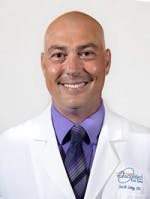
Inside Intrepid, Jacob Lang, OD, FAAO, is joined by Jaclyn Garlich, OD, FAAO and Damon Dierker, OD, FAAO to discuss the impact of direct-to-consumer (DTC) advertising for prescription drugs on eyecare patients and strategies optometrists can use to set accurate expectations around pharmaceuticals.
Dr. Lang is the president of the Intrepid Eye Society (IES) and an optometrist at Associated Eye Care; Dr. Garlich is the secretary of the (IES) and owns a private practice, Envision Optometry in Boston, MA; and Dr. Dierker is Director of Clinical Strategy and Optometric Services at Eye Surgeons of Indiana.
DTC prescription drug advertising fast facts
- The United States and New Zealand are the only two countries that allow drug companies to advertise prescription medications directly to the public. Every year, drug companies spend more than $10 billion on DTC advertisements—rocketing up from $360 million in 1995 to $1.3 billion by 1998.1
- Pharmaceutical companies spent over $6 billion on DTC television advertising across all channels in 2024, with 75 brands each spending at least $10 million.2
- A report found that prescription pharma advertisers accounted for about 11.6% of the total ad dollars flowing to national broadcast and cable networks.3
- That investment generated over 413 billion ad impressions and 1.58 million minutes of advertising across 271 brands. Note that this made up ~5.8% of the overall reach of TV.3
- A 2025 survey of US adults (n= 1,033) found that 97% had seen prescription drug advertisements, with 53% reporting seeing them almost every day.4 Additionally, almost a quarter of respondents reported talking with a doctor about a specific medication they saw or heard an ad for.
- Other studies have indicated that patients in regions with high DTC drug advertising were 40% more likely to switch to heavily-promoted drugs without clinical benefit, adding $400 per patient annually.5
The impact of DTC marketing on eyecare patients
With the growing prominence of DTC pharmaceutical advertising across print media, TV, online, and social media, the average eyecare patient is increasingly arriving at appointments with specific questions shaped by what they’ve seen in ads. Dr. Garlich explained that optometrists play a pivotal role in providing accurate medical information about these drugs and other potential interventions to address the patient’s symptoms.
Case in point, a 2022 survey found that 34.0% of respondents said that a prescription drug advertisement caused them to look for more health information; the internet was the most-reported place (68.4%) participants said they sought more information.6
“It’s our job to listen to the patient, do a thorough examination, and then decide: Does this patient have this condition and are they a candidate for what they’ve discussed, or can I give them a better outcome by doing something else?”
Patients are exposed to prescription drug ads online and on social media as well; the abovementioned survey also found that of the respondents who saw pharmaceutical ads, 30.5% reported seeing prescription drug ads on search engines (ex: Google, Bing), 26.1% reported seeing them on social media, and 44.5% reported seeing them in online banner ads appearing on their screen.6
On these platforms, patients are targeted by proprietary AI algorithms that leverage collected data to profile and characterize each user.7 Thus, as they use social media or search engines to look up symptoms or illnesses, they are feeding even more into these algorithms designed to incentivize users to click on ads and purchase products.
Staying on top of pharmaceutical advertisements
Educational information on prescription drugs for doctors, which Dr. Lang coined as direct-to-doctor marketing, is a key factor in ensuring that eyecare providers are well-informed on new drugs and devices and can provide evidence-based treatment recommendations.
Dr. Garlich emphasized that this means that direct to doctor marketing needs to happen first so that patients don’t show up to the exam room discussing a product that the optometrist has never heard of before.
“There needs to be motivation and awareness on the doctor’s end so that you’re ready to answer some of those questions.”
She also recommended mentioning any relevant drugs that patients are not candidates for during appointments because they are likely seeing these ads and are aware of them; they may just not be mentioning them during appointments.
Navigating the gray zone of social media prescription drug advertising
Unlike traditional DTC advertising, social media promotion can be difficult to identify for patients as an increasing reliance on digital and social media channels, including undisclosed paid influencer promotion, has blurred the lines between editorial content, user-generated media, and pharmaceutical advertising.7,8
Moreover, platform algorithms complicate this oversight by amplifying this content to receptive audiences.7 For example, Dr. Garlich mentioned a keratoconus patient who showed her a screenshot of an Instagram post of a seaweed-based eye drop that could cure blindness. When asked why the patient was blind, the patient wasn’t sure—highlighting the importance of optometrists being open to listening without judgment to what patients are seeing on their social media feeds.
“Changes in DTC pharmaceutical advertising that are steering doctors out of the equation, like apps where patients can get drugs with minimal medical oversight, can be scary for a lot of reasons, especially considering the risks associated with some of these medications.”
Dr. Dierker highlighted that if one patient shows their doctor a post, there are likely another 10, 20, or 100 who saw it and didn’t discuss it with a healthcare provider. This is particularly concerning as a 2024 review found that while 100% of pharmaceutical social media posts highlighted drug benefits, only 33% mentioned potential harms.8 Further, 88% of ads for top-selling drugs are posted by individuals and organizations that fail to adhere to the FDA fair balance guidelines.
In recent regulatory news:
In September 2025, the FDA announced that it is initiating a rulemaking process to “eliminate the ‘adequate provision’ loophole that allows pharmaceutical advertisements to hide safety information by placing it in another format or location.”9,10
Experts have explained that, if passed, this “could result in a de facto ban on drug advertising due to the high costs associated with fully publicizing a drug’s safety profile and practical limitations of broadcast advertising.”11
A finalized rule is still a while away as the FDA needs to allow for a 60- to 90-day period of public comment, then likely a year or two to actually complete the rulemaking process. Moreover, if the rule is finalized, the government agency is also likely to see an influx of First Amendment lawsuits from industry.11
Disease awareness campaigns in eyecare
Drs. Lang and Dierker noted that they have both noticed an uptick in patients asking them about
thyroid eye disease (TED), potentially related to the recent Amgen-sponsored “This is TED” disease-awareness campaign.
These patients often come in concerned they have TED due to red, irritated, and watery eyes, so Dr. Lang performs a comprehensive evaluation, and if the results point to a different diagnosis, he then pivots to educating patients on the many potential etiologies for their symptoms while gently redirecting the conversation to what he thinks is the root cause.
Watch the video to learn more about how DTC marketing for presbyopia drops has changed since the launch of VUITY!
Key takeaways
- Pharmaceutical companies spend billions of dollars on DTC television advertising annually, with 75 brands each spending at least $10 million.2
- Paired with ads in print media, radio, and on social media, one study found that this has resulted in over 50% of Americans being exposed to DTC prescription drug ads on a daily basis.4
- Seeing ads for prescription drugs has been shown in multiple studies to result in increased information-seeking from patients (largely on the internet).5,6,8
- Additionally, studies have found that patients in regions with high DTC drug advertising were 40% more likely to switch to heavily-promoted drugs without clinical benefit.5
- The FDA recently announced that it is planning to move forward with a rule that could remove the adequate provision guidance in DTC prescription drug ads, which would have a significant impact on advertising for pharmaceutical companies.9,10
Conclusion
With the consistent exposure to DTC pharmaceutical advertising, modern eyecare patients are now coming to appointments with more familiarity with what may be ailing them and questions about new remedies that are available.
“While marketing campaigns create curiosity, it’s the doctor’s job to provide clarity and set realistic expectations for treatment based on our expertise.”
Want this episode in podcast form? Subscribe to Inside Intrepid on your favorite podcasting platforms!