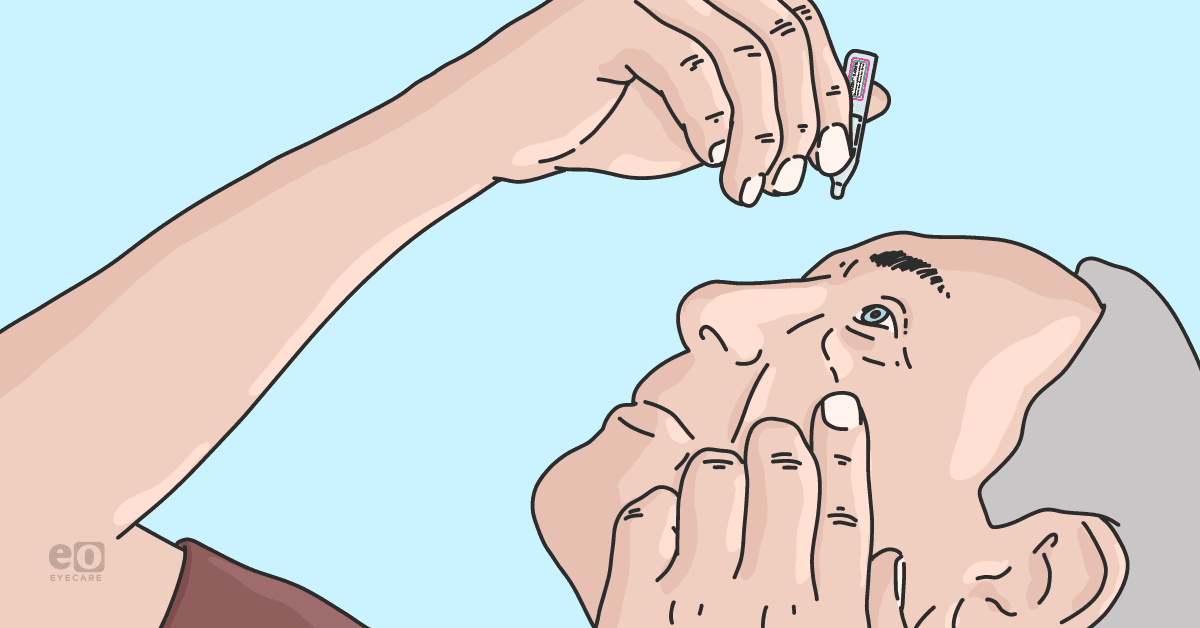
The main clinical objective of most glaucoma treatments are to lower intraocular pressure (IOP) and slow disease progression.1 The reality is that to achieve these goals most patients will likely be prescribed one or more topical eye-drops during their treatment journey.2 The efficacy of these topical treatments is dependent on a patient’s ability to administer treatments as directed, accurately, and consistently.3
In the early stages of glaucoma, the impact of treatment adherence is not typically front of mind for patients due to the asymptomatic nature of their disease.4 Although patients will begin treatment with a topical drop, the reality is only 60% of patients adhere to their prescribed treatment regimen.2
Preservatives and ocular surface disease
Despite decades of research demonstrating their cytotoxic effects, preservatives continue to be a mainstay and are present in approximately 70% of topical formulations.5 Their effects have been extensively documented, with patients reporting irritation, burning, stinging, dryness, and itching.6 Cumulative exposure has also been linked to increases in OSD.7
Individuals who experience these types of side effects from their topical eye-drops, such as burning, stinging, dry eyes, etc., report significantly higher levels of non-adherence than those who do not experience side effects.8 These side effects, which may be attributed to preservatives, present a major barrier to therapeutic success because patients are not taking their medication as prescribed.8,9
This underscores the importance of prioritizing tolerability and patient satisfaction when developing a glaucoma treatment plan, particularly considering the association between worse medication adherence and worse visual field progression.10 With preserved and preservative-free prostaglandins established to have similar efficacy in lowering pressure,11 the priority shifts to finding a product that a patient can be consistent with. Tailoring treatment solutions that consider a patient’s individual needs and experiences could lead to improved adherence, and support better clinical outcomes for patients.12
Improving tolerability and patient satisfaction with IYUZEH™
Today, we see continued advancement in preservative-free eye drop formulations as options for patients with high IOP. IYUZEH™ (latanoprost ophthalmic solution) 0.005% is the first preservative-free latanoprost for lowering IOP in open-angle glaucoma and ocular hypertension (OH).13
In two non-inferiority studies conducted in Europe† (n=353)14 and the US‡ (n=335)11, preservative-free latanoprost has demonstrated clinically meaningful IOP-lowering effects with comparable mean IOP in patients at day 15, 42 and day 84 to preserved formulations. In these studies, the most frequently reported ocular adverse reactions were conjunctival hyperemia and eye irritation.11 Preservative-free latanoprost 0.005% formulation showed a favorable safety profile, with fewer incidence of treatment emergent adverse events than benzalkonium chloride–preserved latanoprost 0.005%.11
In a real-world study involving 1,872 patients who switched to preservative-free latanoprost ophthalmic solution, 95.3% were satisfied (55.2%) or very satisfied (40.1%) with preservative-free latanoprost, regarding tolerability.15 The proportion of patients satisfied with IYUZEH was similar among patients previously receiving preserved treatments (95%) and among treatment-naïve patients (97.3%).15 Only 3.5% were unsatisfied and 0.7% very unsatisfied; data were missing for 0.5%.15 OSD was reported in less than 7% of patients and, when it occurred, severity was generally mild.15
As clinicians, we have a shared responsibility to empower our patients to take an active role in managing their eye health. It is essential to create treatment plans that factor in tolerability and patient satisfaction, shaped around each patient’s unique priorities and treatment goals.
†The European trial was a noninferiority study comparing mean IOP in patients who used preservative-free latanoprost and XALATAN at day 15, day 42, and day 84.
‡The US trial was a prospective, randomized, multicenter, observer-masked, noninferiority phase III trial (N=335) conducted at 31 sites across the US to evaluate the noninferiority of IYUZEH compared to XALATAN® in patients with open-angle glaucoma or ocular hypertension.


About IYUZEH
IYUZEH™ (latanoprost ophthalmic solution) 0.005%, an opalescent, white to slightly yellow ophthalmic solution, is a topical formulation of latanoprost that is indicated for the reduction of elevated intraocular pressure (IOP) in patients with open-angle glaucoma (OAG) or ocular hypertension (OHT). IYUZEH does not contain a preservative – it is the first and only preservative-free formulation of latanoprost, the most prescribed prostaglandin F2α analogue (PGA), in the United States. The recommended dosage of IYUZEH is one drop in the affected eye(s) once daily in the evening. If one dose is missed, treatment should continue with the next dose as normal. Reduction of the IOP starts approximately 3 to 4 hours after administration and the maximum effect is reached after 8 to 12 hours. IOP reduction is present for at least 24 hours.
In the two clinical trials conducted with IYUZEH (latanoprost ophthalmic solution) 0.005%, the most frequently reported ocular adverse reactions were conjunctival hyperemia (34%) and eye irritation (19%) compared to XALATAN, the preserved 0.005% latanoprost reference product which reported conjunctival hyperemia (37%) and eye irritation (31%).
Learn more about IYUZEH at iyuzeh.com.
Indications and Important Safety Information for IYUZEHTM
INDICATIONS AND USAGE
IYUZEHTM (latanoprost ophthalmic solution) 0.005% is a prostaglandin F2α analogue indicated for the reduction of elevated intraocular pressure in patients with open-angle glaucoma or ocular hypertension.
IMPORTANT SAFETY INFORMATION
CONTRAINDICATIONS
Known hypersensitivity to latanoprost or any other ingredients in this product.
WARNINGS AND PRECAUTIONS
IYUZEH may cause changes to pigmented tissues. Most frequently reported changes are increased pigmentation of the iris, periorbital tissue (eyelid), and eyelashes. Pigmentation is expected to increase as long as IYUZEH is administered. Iris pigmentation is likely to be permanent. Eyelid skin darkening and eyelash changes may be reversible.
IYUZEH may cause gradual change to eyelashes including increased length, thickness, and number of lashes. These changes are usually reversible upon discontinuation of treatment.
IYUZEH should be used with caution in patients with a history of intraocular inflammation (iritis/uveitis) and should generally not be used in patients with active intraocular inflammation.
IYUZEH should be used with caution in aphakic patients, in pseudophakic patients with a torn posterior lens capsule, or in patients with known risk factors for macular edema.
Reactivation of herpes simplex keratitis has been reported during treatment with latanoprost. IYUZEH should be used with caution in patients with a history of herpetic keratitis.
Contact lenses should be removed prior to the administration of IYUZEH and may be reinserted 15 minutes after administration.
ADVERSE REACTIONS
The most common adverse reactions (5% to 35%) for IYUZEH are: conjunctival hyperemia, eye irritation, eye pruritus, abnormal sensation in eye, foreign body sensation in eyes, vision blurred, and lacrimation increased.
DRUG INTERACTIONS
The combined use of two or more prostaglandins or prostaglandin analogs including IYUZEH is not recommended. It has been shown that administration of these prostaglandin drug products more than once daily may decrease the IOP lowering effect or cause paradoxical elevations in IOP.
Please click here for the full Prescribing Information.
Thea Pharma Inc. has sponsored this article.
PRC-EN-2535-v1 06.2025