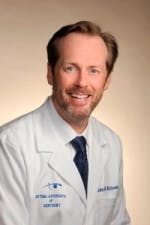
On this episode of Retina Mentor Moments, John W. Kitchens, MD, and Esther Lee Kim, MD, discuss navigating a career in retina, highlighting Dr. Kim's journey from her medical education to her role as a retina specialist at the Orange County Retina Institute, and emphasizing the importance of mentorship and choosing well-managed practices.
The journey to retina
Dr. Kim earned her medical degree from Yale University School of Medicine and completed her internship in internal medicine at Cedars-Sinai Medical Center. She finished her ophthalmology residency at the USC Roski Eye Institute and pursued a fellowship in vitreoretinal surgery at the Massachusetts Eye and Ear Infirmary.
Her desire to be closer to family eventually brought her back to California, where she is now a retina specialist at Orange County Retina.
Vetting an ophthalmology practice
Getting training in your intended practice area offers significant benefits. Dr. Kim found this to be true at both USC and Mass Eye and Ear. A major advantage is the overlap in professional networks—her attendees and potential partners often knew each other, allowing for valuable insights into those work environments.
Additionally, she sought advice from mentors and explored various job options to find the best fit for her. She chose to work at Orange County Retina because she felt it was well-established and offered a unique breadth and depth of strengths, including the opportunity to participate in clinical trials.
Dr. Kim values being part of a practice involved in clinical trials, as it keeps her engaged in future developments. This involvement outside of the day-to-day practice of retina enhances her abilities to practice as a retina specialist, get involved with industry, and hopefully make a meaningful contribution to the field.
From private practice to private equity
Orange County Retina was recently acquired by NVISION Eye Centers, which was historically a cataract/refractive surgery-heavy organization. Dr. Kim mentions that, day-to-day, not much has changed as the clinical operations and staff have remained the same.
She notes that there are pros and cons to each setup, but has seen some advantages of being part of a larger group, including access to in-house counsel and reduced administrative burdens.
Dr. Kim states that management organizations are becoming increasingly a part of medicine, and it’s best to evaluate all options with what works best for you. Dr. Kitchens adds that new fellows should consider private equity if the environment allows them to refine their skills and care for patients in their preferred way, including surgery.
Training at Mass Eye and Ear
Dr. Kim fondly recalls her time at the Mass Eye and Ear Infirmary. This experience exposed her to various practice styles, enriching her clinical skills. She also appreciated maintaining a healthy work-life balance during her stay.
She also speaks positively about participating in the fellowship interview process, highlighting the diverse group of fellows and attendees as a valuable aspect of the experience.
Early career influences
As a retina fellowship director at Yale, Dr. Huang greatly influenced Dr. Kim to pursue a career in ophthalmology. Initially, Dr. Kim thought ophthalmology had a narrow focus; however, Dr. Huang took her under his wing and convinced her that specializing in retina was the best choice in ophthalmology.
Dr. Kitchens initially intended to focus on infectious diseases. However, during his ophthalmology rotation, he watched Dr. Ron Danis perform a CMV retinitis detachment repair in a surgical video.
Witnessing this procedure in real-time convinced him to pursue a career in ophthalmology. This was such a significant moment for him that he still uses surgical videos in his practice to teach students.
To watch surgical videos of procedures ranging from retinal detachment repair to IOL implantation to MIGS, click here!