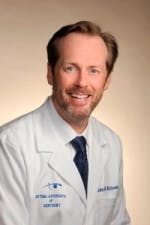
On this episode of Retina Mentor Moments, John W. Kitchens, MD, and Michael Javaheri, MD, MSc, FASRS, discuss Dr. Javaheri's journey of building a successful retina practice in Beverly Hills, California, highlighting the importance of patient communication, a "less is more" surgical philosophy, and resilience in the face of challenges.
Retina the right way
Dr. Javaheri notes that practicing in Beverly Hills is challenging and competitive due to the small area crowded with many retina specialists. Patients also tend to be highly educated, frequently seeking second and third opinions, and eager to discuss their treatment options.
He has worked in various types of practices, which have helped him improve his patient communication skills. Key qualities he has developed include being confident and calm when presenting information clearly and repeating patient education as many times as needed to reinforce the message.
Dr. Javaheri emphasizes that doing “things the right way” has laid a solid foundation for his practice. He consistently treats patients like family. One important lesson he learned early on is that less is more in surgery, and he has gained a reputation for avoiding unnecessary procedures.
No compromise
Dr. Javaheri knew he wanted to stay in his hometown of Beverly Hills, so he accepted a part-time position in Glendale while waiting for the right opportunity to arise. He began working at multiple offices to fill his schedule. The problem with this approach was that, over time, practices might look for younger graduates, so they wouldn’t have to pay a higher per diem.
He even recalled taking a position that required him to commute weekly from Los Angeles to Fresno while the retina specialist was on maternity leave for about 6 months. The practice was so well-run that, despite the straight journey from the airport to the operating room, it taught him a great deal about practice management and streamlining procedures.
Dr. Javaheri contacted Dr. Yossi Sidikaro, and after some discussion, they agreed to collaborate and relocate to a new practice location in Beverly Hills. Initially, he continued to work on a per diem basis at a few other practices, managing to work 2 days a week at the new practice location.
This arrangement allowed him to maintain a stable income while growing his practice. Upon Dr. Sidikaro's retirement, he transitioned to a full-time schedule at this practice.
Retina practice pearls
Dr. Javerhi gained business management experience while working. His exposure to various practice settings taught him effective strategies and inefficiencies, ultimately saving time and money in the long run.
One thing that stuck with Dr. Javaheri was the importance of widefield fundus photography when educating patients on retinal pathology. Taking a photo every time not only helps with documentation but also promotes effective patient communication.
Resilience when encountering failure
Dr. Javaheri discusses his humbling career journey, which began with medical school, a master's degree, residency, and fellowship at USC. When he applied for residency, he didn’t match with any program he wanted in his first year because he kept his rank list short.
There were open spots at other schools, but he didn’t want to pursue those programs, so as an intern, he continued to do research despite his busy schedule and completed a rotation at Stanford. When he reapplied, he realized he wasn’t getting the same interviews and became jaded.
During his interview with the USC chairman, he showcased evidence of his research from his internship. This left a lasting impression, as the chairman highlighted that responses to failure reveal a lot about a person. Dr. Javaheri’s actions confirmed this belief. He ultimately matched with his top choice at USC, demonstrating his clear goals and readiness to do whatever it took to achieve them.
Next steps
Dr. Javaheri states that he is finally in a great place in his career. He has expanded his office and is now conducting clinical trials and research there.
He recently received a grant from the Hoskins Center IRIS Registry Research Fund to study which injections are most effective for different patient demographics and biomarkers, and to determine the recommended intervals for these injections.
He’s also working with the Stephen J. Ryan Initiative for Macular Research (RIMR) to do a retrospective study on OCT changes of macular degeneration over time.