


The 2024 Global Myopia Health Summit recognized myopia as a pandemic-level global health concern. The World Health Organization (WHO) now includes it in its Global Action Plan, noting barriers such as low awareness and limited access to interventions.1 Rather than a “set and forget” process, myopia management is a structured commitment from childhood detection through early adulthood.2
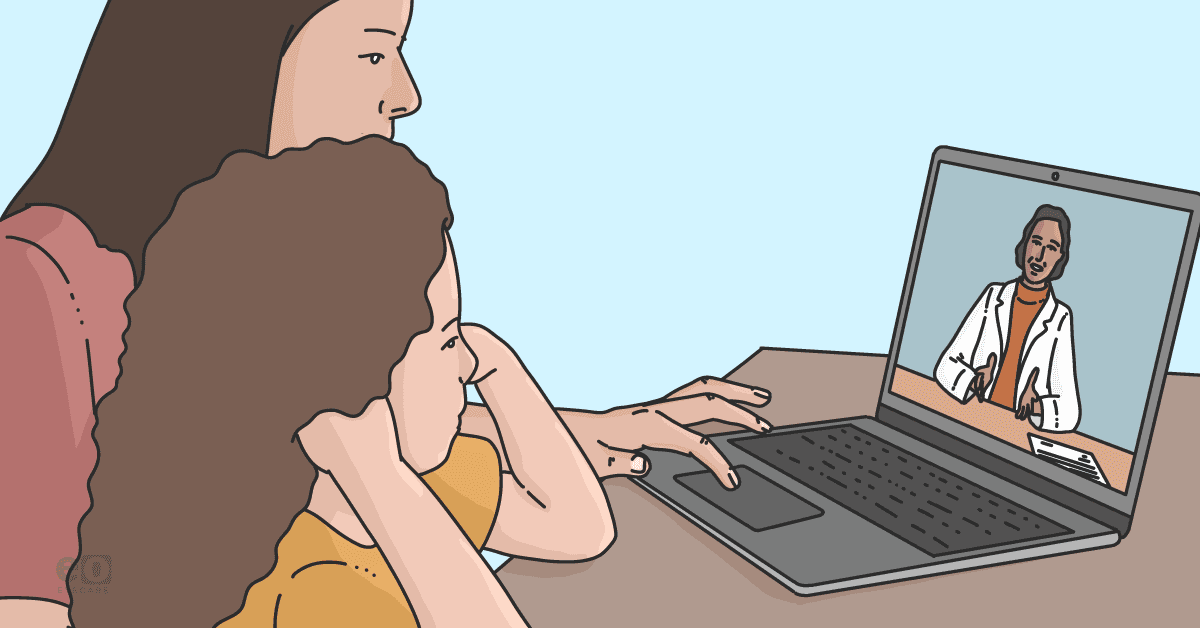
Telehealth is the delivery of health information, prevention, monitoring, and care virtually.3 It is a recognized adjunct within myopia management and endorsed by organizations for ongoing monitoring.4 This article outlines how telehealth supports modern myopia management, its limitations, and how practices can effectively implement it within a hybrid model.
The expanding role of telehealth in myopia control
Myopia may affect half the world by 2050.5 This rising demand will strain optometry workflows unless new models are adopted.6 The use of telehealth in eyecare was already gaining momentum before 2020,7 and the COVID-19 pandemic accelerated its normalization with organizations adapting to the constraints by promoting remote consultations.4,8
A review of 27 studies found that telehealth in optometry is currently utilized for optometrist-ophthalmologist collaboration across various specialties. It was also found to be used for remote subjective refraction and low vision rehabilitation. These services were prevalent in more rural settings and associated with high patient satisfaction.9
Telehealth, particularly in myopia care, goes beyond remote consultations to include compliance monitoring and remote education for parents and patients.10,11 Recent advances in AI have resulted in platforms that support clinicians in early detection and predicting progression, thereby introducing a scalable hybrid model that can help reduce workload while enhancing care.12
What telehealth can and cannot accomplish
There are several ways in which telehealth is employed in managing myopia:
Remote comfort and compliance checks
Symptom and compliance logging is being trialed for orthokeratology treatment of myopia. A pilot study in 2021 evaluated the usability of a mobile app called "EYE is OK" that provided patients with tailored health education to support compliance with medical instructions and relevant information to support clinicians during full in-person visits.10
The study authors noted that 40 to 60% of enrolled parents utilized the app and after implementation, the compliance with follow-up visits substantially improved.10 Additionally, atropine therapy also benefits from remote check-ins at frequent intervals to assess adherence to therapy and adverse effects.13
Parent and patient education
Myopia education can be delivered through secure messaging platforms and has been shown to promote positive behavior changes, thus improving myopic outcomes.9,14 Parent and patient education also serves as a preventative measure.
The WHO trialed its SMS-based MyopiaEd Digital intervention system in 2022 with 133 parents.15 The trial reported a significant increase in both outdoor time and eye examinations, with 84% of participants’ children undergoing eye examinations after the intervention.
Telehealth triaging
Virtual screening and consultations are utilized in a wide range of specialties to extend capacity and protect clinic chair time.16 Within myopia care, virtual consultations can help determine whether an in-person visit is needed sooner than scheduled.
It is important to note that while both clinicians and patients have found telehealth convenient, it cannot replace in-person comprehensive care.8
Limitations of telehealth in myopia management
Telehealth has several limitations, as it cannot perform essential procedures such as axial length measurements, ocular health assessments, and refractions, all of which are required for accurate and complete myopia management and necessitate clinic visits.
Benefits of telehealth in myopia care to patients and practices
The College of Optometrists (UK) recommends annual assessments for myopic patients until age 12 to 13, and every 2 years thereafter.17 About 1 in 3 children and teenagers currently live with myopia.18
This places significant pressure on primary care optometrists to detect and manage patients within allotted time slots. Practice owners must also balance profitability with sufficient clinic time to support community health.
Hybrid telehealth models in ophthalmology have significantly reduced the need for in-person visits. They also lift barriers to eyecare by reducing travel time and costs, especially in rural regions.9,19 These models offer flexible scheduling and more frequent interactions than in-person follow-ups allow.20
Additionally, parents feel more supported through ongoing engagement with their eye clinic between visits.21 They receive reinforcement and a platform for having their questions answered, but clinicians also benefit from feedback that aids management.
Information on compliance, spectacle wear time, and behavioral habits is often difficult to recall during in-person assessments, and inaccuracies can undermine management effectiveness.
Therefore, combining face-to-face consultations with telehealth yields higher adherence and retention, thereby improving outcomes.22 Instead of being overwhelmed by mounting pressure, this scalable model can, in turn, lead to practice growth.
Practical ways to incorporate telehealth into myopia workflows
Telehealth is most effective when structured within an established management model rather than through unregulated communication. Studies point towards a lack of protocols as a key limitation.9
Example myopia workflow with telehealth
- First visit: Start with myopia detection (refraction/axial length), establish management (spectacles, contact lenses, or atropine), and discuss behavioral changes.
- Week One:
- Spectacle/atropine: A remote 1-week comfort and compliance check by the optometrist assesses effectiveness and determines whether early recall is necessary.
- Contact lens/orthokeratology: An in-person visit is required to assess fit, followed by a 1-week virtual appointment.
- Education: Parents can be given access to app-based education and guided symptom logging/habit tracking, which are shared with their optometrist to support the next clinic visit.
- Although AI does not replace clinician advice, technologies such as ChatMyopia (an AI agent trained on myopia literature) offer an interactive platform that provides personalized information, rather than relying on leaflets.23
- Month 3 follow-up:
- This visit assesses treatment effectiveness and compliance and whether the patient is safe to be monitored annually or requires closer monitoring.
- Month 6 (mid-cycle) virtual follow-ups:
- Virtual check-ins support in-person annual examinations by providing the optometrist a more accurate timeline of treatment compliance, habits and symptoms. This allows clinic visits to remain focused on management and streamlines history-taking.
- The additional points of contact through telehealth appointments can also help parents/patients feel better supported and closely monitored.
Compliance, documentation, and risk management
The use of telehealth does not reduce professional responsibility and requires clinicians to work under the same HIPAA-compliant safeguards and governance frameworks as with in-person care.9,24 Although patients report high satisfaction, there are understandable concerns regarding data security and privacy.25
Therefore, to ensure safety and reliability, all encounters should be documented within an electronic health record (EHR) and indistinguishable in quality and completeness from in-person notes.8 Delivery of such care should only continue with patient and parent consent, as required by local governing frameworks.
Tips for success with telehealth
Normalizing telehealth early in care pathways enhances patient satisfaction.25 Patients and families should have clear expectations, as outlined in pre-visit instructions, to improve visit quality and efficiency.26
The use of telehealth is safest when staff are trained on escalation criteria and what should be managed in person.27 Triggers could include signs of poor treatment adherence, side effects, or rapid progression of myopia.
5 key takeaways
- Myopia is considered a pandemic-level health concern expected to affect half of the world by 2050 and strain existing care pathways.1,5,6
- Telehealth has become increasingly normalized since the COVID-19 pandemic and is now an established adjunct in optometry and ophthalmology, with high patient satisfaction.4,8,9
- Within clearly defined boundaries, telehealth can reliably support myopia care through remote comfort checks, compliance monitoring, parental education, behavioral reinforcement, and triage between in-person visits.10,13,14,15
- Hybrid care models can improve patient access, adherence, and retention while reducing chair-time pressure and improving clinic efficiency.9,21
- Telehealth does not replace comprehensive in-person examinations, nor reduces clinician responsibility. Optometrists must adhere to the same standards as in-person appointments and document their advice and findings in an EHR.8

