Published in Retina

A Closer Look at Qlosi and the Bascom Pupil Selectivity Analysis

This is editorially independent content supported by advertising from Orasis Pharmaceuticals
3 min read

Join Drs. Rishi Singh, Nicole Fram, and Mary Beth Yackey as they delve into the Bascom pupil selectivity analysis of new generation presbyopia-correcting drops.

In this episode of Evidence Based Retina, Rishi Singh, MD, FASRS, discusses the latest research on presbyopia-correcting drops with Nicole Fram, MD, and Mary Beth Yackey, OD.
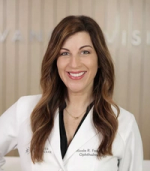
Dr. Fram is a managing partner at Advanced Vision Care in Los Angeles, California, and serves as an adjunct assistant professor at Moran Eye Center. Dr. Yackey is an optometrist at the Cincinnati Eye Institute, where she works in the retina department.

0.4% pilocarpine and the Bascom pupil selective analysis

The NEAR-1 and NEAR-2 trials showed that 40.1% of patients achieved three lines of improvement, while an even higher percentage (64.6%) gained two lines of improvement with 0.4% pilocarpine.1
One of the sources of apprehension in prescribing pilocarpine for presbyopia correction is the concern of retinal detachments, particularly with higher concentrations (1%) that have been previously observed. At lower concentrations, such as 0.4% pilocarpine, the risk is believed to be much lower as no retinal detachment, retinal tear, or vitreomacular traction was reported during the NEAR-1 and NEAR-2 trials.1
A recent study conducted by Orasis and Bascom Palmer faculty evaluated the ocular effects of 0.4% pilocarpine compared to 2% pilocarpine by measuring ciliary muscle thickness via OCT and dynamic OCT, pupil diameter, and lens thickness.2
While pupil diameter and lens thickness changes were observed in a dose-dependent manner, ciliary muscle thickness showed no measurable difference between the 0.4% and 2% pilocarpine groups. Although limited by sample size, these findings carry significant clinical implications, demonstrating that at the 0.4% concentration, pilocarpine does not induce ciliary muscle movement.2

Clinical evaluation and patient selection

Proper patient selection is emphasized, with the "sweet spot" for these drops identified as patients aged 40 to 55, particularly latent hyperopes and early presbyopes with good distance vision. Patients with myopia, particularly high myopia, should be excluded, and those with presbyopia should consider contact lenses or lens-based surgery for correction.
Eyecare practitioners should evaluate for existing retinal conditions, such as lattice degeneration or retinal thinning, before prescribing, as these conditions may disqualify patients from using these eye drops. Although wide-field imaging, such as Optos, can aid in assessment, it does not replace a comprehensive dilated eye exam.

Patient expectations and follow-up

Finally, clinicians should encourage patients to use the drops for a few weeks to assess efficacy before determining whether the treatment is unsuccessful. Counsel patients about potential side effects, including initial headaches, night vision difficulties, and mild stinging.
Educating patients about the warning signs of retinal issues—such as new floaters, flashes, or a curtain/veil in their vision—is an essential part of care.
  1. Holland E, Karpecki P, Fingeret M, et al. Efficacy and Safety of CSF-1 (0.4% Pilocarpine Hydrochloride) in Presbyopia: Pooled Results of the NEAR Phase 3 Randomized, Clinical Trials. Clin Ther. 2024;46(2):104-113. doi:10.1016/j.clinthera.2023.12.005
  2. Delaney-Gesing A. New QLOSI safety data supports drop as pupil selective for presbyopia. Glance by Eyes On Eyecare. January 23, 2026. Accessed June 11, 2026. https://glance.eyesoneyecare.com/stories/2026-01-23/new-qlosi-safety-data-supports-drop-as-pupil-selective-for-presbyopia/.
Rishi P. Singh, MD, FASRS
About Rishi P. Singh, MD, FASRS

Rishi P. Singh, MD, FASRS, is the Chair of the Department of Ophthalmology at Mass General Brigham, overseeing ophthalmology across Massachusetts Eye and Ear, Massachusetts General Hospital, Brigham and Women’s Hospital, and affiliated sites. He is also a Professor of Ophthalmology at Harvard Medical School.

Previously, Dr. Singh served as Vice President and Chief Medical Officer at Cleveland Clinic Martin Health in Stuart, Florida, and as a staff surgeon at the Cleveland Clinic, where he was also Professor of Ophthalmology at the Cleveland Clinic Lerner College of Medicine in Cleveland, Ohio. He received both his undergraduate degree in medical science and his medical degree from Boston University, completing his internship at Tufts University. Dr. Singh went on to complete his ophthalmology residency at the Massachusetts Eye and Ear Infirmary/Harvard Medical School and a medical and surgical vitreoretinal fellowship at the Cole Eye Institute at the Cleveland Clinic.

Dr. Singh specializes in the management of complex retinal diseases, including diabetic retinopathy, retinal vein occlusions, retinal detachment, and age-related macular degeneration. He has authored over 300 peer-reviewed publications, books, and book chapters and serves as Principal Investigator for numerous national and international clinical trials aimed at improving outcomes for patients with retinal diseases.

He is the founder and past president of the Retina World Congress, chairs some of the largest continuing medical education meetings in retina, and serves on editorial boards and review panels for major ophthalmology journals. His leadership has extended into digital innovation, having helped lead enterprise-wide implementation of clinical technologies including Epic modules, digital informed consent, and patient-facing kiosks.

Dr. Singh has received multiple accolades for his contributions to ophthalmic research and innovation, including the Alpha Omega Alpha Research Award, the American Society of Retina Specialists Young Investigator Award, and the J. Donald Gass Beacon of Sight Award. He also leads The Center for Ophthalmic Bioinformatics, a research initiative focused on leveraging big data and artificial intelligence to advance understanding and treatment of retinal disease.

Rishi P. Singh, MD, FASRS
Nicole Fram, MD
About Nicole Fram, MD

Dr. Nicole Fram is a nationally recognized ophthalmologist in the areas of refractive and complex cataract surgery, corneal transplantation, and external disease. She is the managing partner of Advanced Vision Care and a Clinical Instructor of Ophthalmology at the Stein Eye Institute, University of California, Los Angeles (UCLA).

Nicole Fram, MD
Mary Beth Yackey, OD
About Mary Beth Yackey, OD

Mary Beth Yackey, OD, joined Cincinnati Eye Institute (CEI) in 2004. Dr. Yackey is a national board-certified provider of Optometric Services and a member of the Vitreoretinal team. Her practice emphasizes eye diseases such as macular degeneration, diabetic retinopathy, vascular diseases of the retina, and urgent eye care.

She also enjoys co-managing pre- and post-operative patients. Her practice includes teaching students, residents, and fellows in-clinic. In her practice, Dr. Yackey participates in studies involving the Vitreo-Retinal space. Dr. Yackey received her Bachelor of Science degree from The Ohio State University and her Doctor of Optometry from New England College of Optometry.

Dr. Yackey is an active member of The Board of Trustees for the Cincinnati Optometric Association. She is also a member of the American Optometric Association. In addition, Dr. Yackey serves as a member of the Board of Trustees for Clovernook Center for the Blind and Visually Impaired and a Medical Chair for the Foundation Fighting Blindness Cincinnati/Northern Kentucky Vision Walk.

Mary Beth Yackey, OD
💙 Evidence Based Retina
Astellas
Regeneron
Bausch + Lomb Xipere
EyePoint Pharmaceuticals
Apellis Pharmaceuticals
Norlase