


Population-based studies indicate that the prevalence of retinal disorders among individuals aged 40 and older ranges from 5.35% to 21.02%. These conditions, which include age-related macular degeneration, diabetic and hypertensive retinopathy, and retinal vein occlusions, are diagnosed through comprehensive clinical examinations and imaging techniques.1
As life expectancy rises, lifestyles evolve, and systemic diseases grow, eyecare professionals (ECPs) are well positioned to diagnose and manage many of these retinal conditions.1 Additionally, recent advancements in diagnostic technology and treatments have changed this landscape.
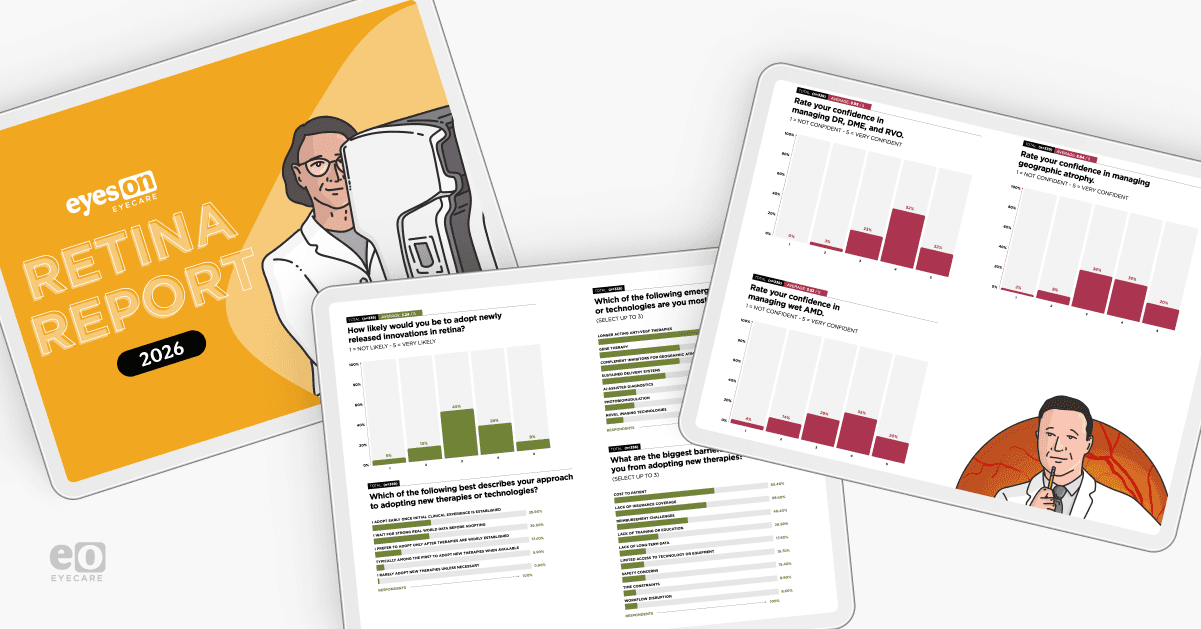
The 2026 Retina Report explores the latest trends in diagnosing and managing retinal conditions. It features insights from recent graduates, seasoned professionals, and practitioners in both corporate and private settings. By bringing together a range of perspectives, the report aims to clarify the current state of retinal disease management, particularly the shift toward interventional methods and the innovative strategies being developed to address this growing challenge.
The 2026 Retina Report covers:
- Diagnostic tests, treatment, and management of retinal disease
- The top resources for ECP continuing education and patient education
- Genetic testing and therapy
- And more!
Download the 2026 Retina Report now or continue reading for a preview of the findings!
Key takeaways from the 2026 Retina Report
- Referrals to education websites/online resources for patient education about retinal disease, management, and the importance of treatment adherence have increased by ~16% since 2025.
- Practice management resources that would be helpful in growing the retina side of the practice include billing and coding, as well as treatment education. Interestingly, billing and coding is now number one as of 2026.
- Patient cost remains the biggest barrier to the adoption of new therapies, and the lack-of-insurance-coverage barrier has increased by ~45% since 2025.
- Optical coherence tomography angiography (OCT-A) is becoming a popular diagnostic test for retinal disease diagnosis, increasing by 10%.
- Zeiss, Genentech, and Regeneron remain the number one companies that most ECPs think of when it comes to innovations in retina.
We hope that the 2026 Retina Report will help you manage retinal disease more effectively as you take a deeper dive into diagnosis, treatment, and management trends. As patients age and remain active in their lifestyles, it’s more important than ever that ECPs stay up to date with innovations in the diagnostic and therapeutic landscapes.
Ready to dive deeper? Download the full 2026 Retina Report now.
If you want more free reports like this—plus educational content and eyecare news—delivered straight to your inbox, sign up for our newsletter!

